

Article Summary
Choosing the right Bridge Type Stone Cutting Machines can directly affect cutting accuracy, production speed, labor cost, material waste, and long-term workshop stability. For stone fabricators working with granite, marble, quartz, engineered stone, countertops, slabs, sink openings, custom shapes, and architectural panels, the main challenge is not simply buying a powerful machine. The real challenge is finding a machine that matches daily production needs, operator skill levels, available workshop space, and future order complexity.
This article explains how buyers can evaluate bridge cutting equipment from a practical factory perspective. It looks at machine structure, axis configuration, control systems, cutting accuracy, material compatibility, maintenance needs, and supplier support. It also discusses how Fujian Xianda Machinery Co.,Ltd. can be considered by buyers who need stable stone cutting solutions for both standard slab processing and more complex fabrication work.
Table of Contents
- Article Outline
- Why Does the Right Bridge Cutting Machine Matter?
- What Problems Do Stone Fabricators Usually Face?
- Which Machine Type Matches Different Stone Jobs?
- What Should Buyers Check Before Purchasing?
- Machine Selection Comparison Table
- How Can the Right Machine Improve Workshop Workflow?
- Why Does Supplier Experience Matter?
- FAQ
- Final Thoughts
Article Outline
This article begins with the core reason bridge cutting equipment matters in stone processing. It then explains common buyer pain points, compares different machine configurations, and gives practical evaluation standards for factories, countertop shops, and stone processing plants. The article also includes a comparison table, application-based selection suggestions, and frequently asked questions for buyers who are preparing to invest in Bridge Type Stone Cutting Machines.
Why Does the Right Bridge Cutting Machine Matter?
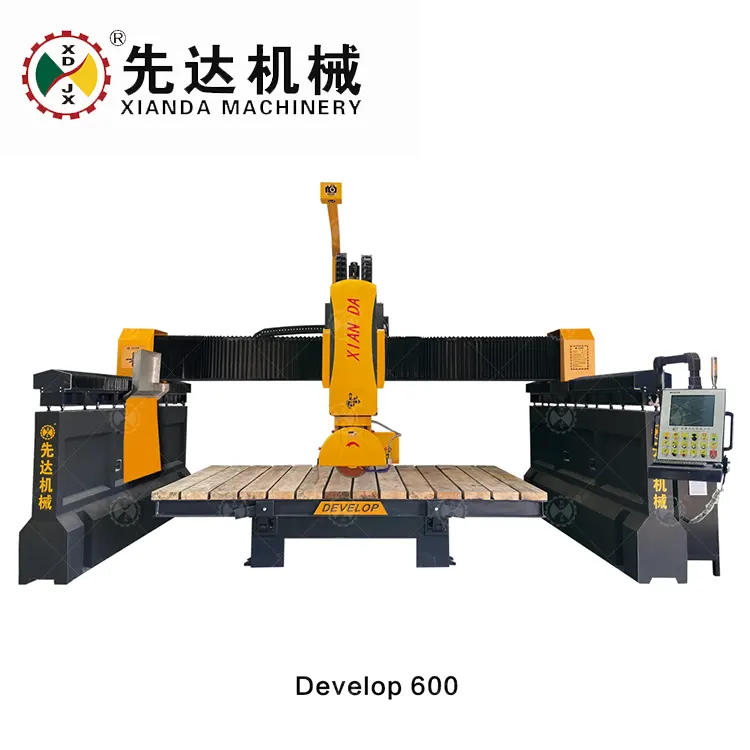
Stone fabrication is a business where small errors quickly become expensive. A slab that is cut with poor alignment may not be reusable. A countertop with inaccurate sink opening dimensions may require rework. A machine that vibrates during cutting may reduce edge quality and increase polishing time. These problems do not only affect one order; they slowly damage delivery schedules, customer confidence, and profit margins.
Bridge Type Stone Cutting Machines are widely used because their bridge structure offers a stable cutting platform for large, heavy, and high-value stone materials. The bridge design allows the cutting head to move across the worktable while the material remains properly supported. For workshops that process large slabs every day, this structure helps improve cutting consistency and reduces the physical burden on workers.
Buyers often focus only on price or blade size at the beginning. That is understandable, but it is also risky. A low-cost machine that cannot keep accuracy after months of use may cost far more in wasted slabs and lost production time. A machine with too many functions may also become a burden if the workshop only needs straight cutting and simple angle work. The best choice is not always the most expensive model; it is the model that fits the actual production rhythm.
What Problems Do Stone Fabricators Usually Face?
Before choosing a machine, buyers should first identify what problem they are trying to solve. A factory that cuts thick granite blocks has different needs from a countertop shop that handles kitchen islands, sink holes, backsplashes, and shaped edges. A company processing standard tiles also has different priorities from a fabricator producing custom architectural stone.
Common pain points usually include:
- Inconsistent cutting accuracy when processing large slabs or repeated orders.
- High labor dependence caused by manual positioning, measuring, and repeated adjustment.
- Material waste from wrong cutting paths, blade deviation, or unstable machine movement.
- Slow order delivery when the machine cannot keep up with high-volume production.
- Limited processing capability when a workshop receives curved, angled, drilled, or profiled orders.
- Difficult operator training if the control system is not clear or practical.
- Maintenance downtime caused by weak structure, poor components, or lack of supplier guidance.
These problems are exactly why many buyers compare Bridge Type Stone Cutting Machines more carefully before making a purchase. A suitable machine should not only cut stone. It should help the workshop become more predictable, easier to manage, and more capable of accepting profitable orders.
Which Machine Type Matches Different Stone Jobs?
Bridge cutting equipment can vary greatly depending on axis configuration, automation level, worktable design, and control system. The buyer should connect the machine type with the real jobs handled by the workshop.
A basic bridge cutting machine is suitable for straight cutting, slab trimming, and routine stone size adjustment. It is often a practical choice for buyers who need stable daily cutting without highly complex shapes. If the workshop mainly processes standard granite, marble, or quartz slabs, this type of machine can provide good value when the frame is strong and the cutting movement is stable.
A 4-axis bridge cutting machine offers more flexibility. It can help with angled cutting and more refined fabrication work. This is useful for countertop manufacturers, stone decoration companies, and workshops that often handle customized slab dimensions. When buyers need better flexibility but do not require full complex shaping, a 4-axis model can be a balanced investment.
A 5-axis bridge cutting machine is designed for more advanced processing. It can support complex shapes, inclined cuts, contour work, and more demanding custom designs. For factories that receive orders involving curved panels, sink processing, special countertops, relief-style work, or architectural stone components, a 5-axis machine may greatly expand production capability.
Infrared bridge cutting machines are useful when visual alignment and accurate positioning are important. They can help operators confirm cutting lines more clearly and reduce measurement errors during daily slab processing. For many small and medium workshops, this kind of machine offers a practical combination of ease of use and cutting reliability.
What Should Buyers Check Before Purchasing?
A careful buyer should look beyond the product photo. The real value of Bridge Type Stone Cutting Machines depends on machine structure, cutting stability, software usability, component quality, after-sales guidance, and the supplier’s understanding of stone processing.
Key points to check include:
- Machine frame strength: A reinforced structure helps reduce vibration, especially when cutting hard stone or thick slabs.
- Cutting accuracy: Buyers should ask about repeat positioning, cutting smoothness, and performance during long work shifts.
- Control system: A clear interface can reduce training time and lower the chance of operator mistakes.
- Material compatibility: The machine should match the buyer’s main materials, such as granite, marble, quartz, artificial stone, or ceramic-related stone panels.
- Processing range: Buyers should consider whether they need straight cutting only, angle cutting, profiling, drilling, engraving, or complex contour work.
- Workshop space: The machine size, loading area, and material handling route should fit the factory layout.
- Maintenance access: Components should be accessible enough for routine inspection, lubrication, cleaning, and replacement.
- Supplier support: Installation guidance, technical communication, spare parts, and operation training can affect long-term machine value.
Fujian Xianda Machinery Co.,Ltd. offers bridge type stone cutting equipment for buyers who need practical stone processing solutions across different applications. When evaluating a supplier, buyers should communicate their material types, slab sizes, daily output goals, and expected cutting patterns clearly. The more specific the production information, the easier it becomes to recommend a suitable configuration.
Machine Selection Comparison Table
| Machine Type | Best For | Main Buyer Concern Solved | Suggested Buyer Type |
|---|---|---|---|
| Standard Bridge Cutting Machine | Straight cutting, slab trimming, basic stone sizing | Stable daily cutting with controlled investment | Small and medium stone workshops |
| 4-Axis Bridge Cutting Machine | Angle cutting, countertops, customized slab work | Better flexibility without unnecessary complexity | Countertop and decoration stone processors |
| 5-Axis Bridge Cutting Machine | Complex shapes, contours, sink openings, profiling | Expanding custom fabrication capability | Advanced stone fabrication plants |
| Infrared Bridge Cutting Machine | Accurate line alignment and routine slab processing | Reducing positioning mistakes and manual checking | Workshops needing reliable visual alignment |
How Can the Right Machine Improve Workshop Workflow?
A good bridge cutting machine improves more than the cutting step. It can change how the whole workshop plans, measures, loads, cuts, checks, and delivers finished stone products. When machine movement is stable and the control process is clear, operators spend less time correcting mistakes and more time completing orders.
For example, a countertop shop may receive drawings for kitchens, bathrooms, hotels, or commercial counters. If the cutting machine supports accurate sizing and flexible operation, the shop can handle different shapes with fewer manual adjustments. This reduces communication pressure between designers, operators, and installation teams.
For a stone factory processing large slabs, the value may come from continuous performance. A machine that can maintain stable cutting throughout the day helps the factory plan output more confidently. It also reduces the risk of delayed shipments caused by unexpected machine instability.
Buyers should also consider the skill level of their operators. Some machines look impressive on paper but are difficult to use in daily production. A practical control system, clear operating process, and reasonable automation level can help new operators learn faster. In real factory conditions, ease of use is not a minor feature; it is part of productivity.
Why Does Supplier Experience Matter?
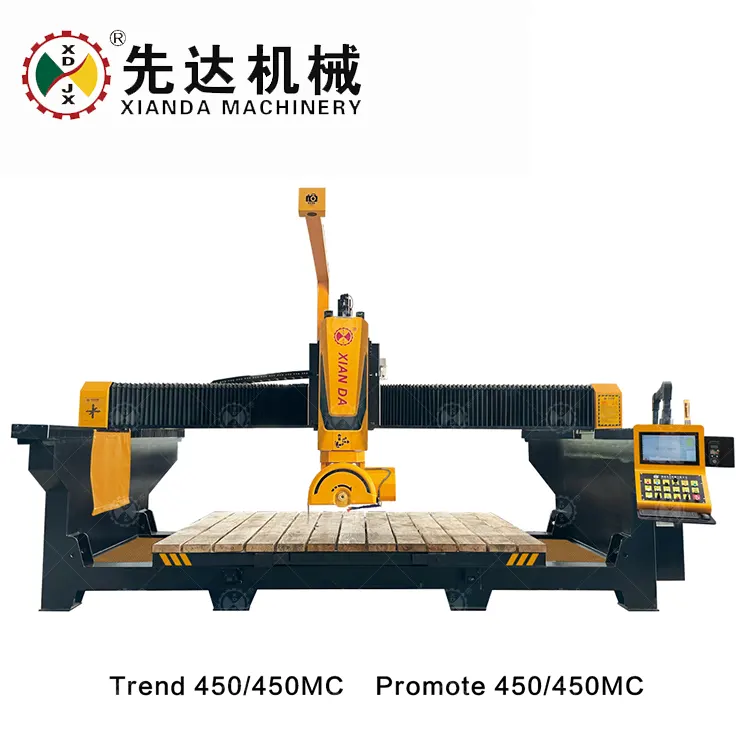
Stone machinery is not a simple one-time purchase. Buyers may need help with model selection, machine layout, operation training, spare parts planning, and later technical communication. A supplier that understands stone processing can help buyers avoid mismatched configurations.
When contacting a supplier, buyers should prepare clear information. Useful details include common slab dimensions, material hardness, expected daily capacity, cutting thickness, workshop voltage, available space, and the type of finished products being produced. If the buyer plans to process countertops, sink holes, curved edges, or special decorative stone, that information should be shared early.
Fujian Xianda Machinery Co.,Ltd. can be approached by buyers who are comparing Bridge Type Stone Cutting Machines for large slab processing, custom stone fabrication, and stable workshop production. Instead of only asking for the lowest price, buyers should ask which machine configuration better fits their real order structure. That conversation usually leads to a more reliable investment.
FAQ
Q1: Are Bridge Type Stone Cutting Machines suitable for both granite and marble?
Yes. A properly configured bridge cutting machine can be used for common stone materials such as granite, marble, quartz, and engineered stone. Buyers should still confirm blade type, cutting thickness, and machine power according to their main material.
Q2: Should I choose a 4-axis or 5-axis bridge cutting machine?
A 4-axis machine is often suitable for buyers who need angle cutting and flexible countertop work. A 5-axis machine is better for more complex shapes, contour cutting, profiling, drilling, and customized stone designs. The decision should depend on actual orders, not only future ambition.
Q3: Is an infrared bridge cutting machine useful for small workshops?
Yes. Infrared alignment can help operators position cutting lines more clearly, which is helpful for workshops that want accurate daily slab cutting without overly complex operation.
Q4: What information should I provide before requesting a quotation?
Buyers should provide material type, slab size, cutting thickness, target products, expected daily output, workshop space, voltage conditions, and whether advanced functions such as profiling or drilling are needed.
Q5: How can I reduce stone waste during cutting?
Choose a stable machine structure, use proper blades, train operators carefully, check cutting paths before processing, and select a control system that supports accurate positioning. The right Bridge Type Stone Cutting Machines can help reduce repeated measurement and cutting mistakes.
Final Thoughts
The best bridge cutting machine is the one that fits the buyer’s real production work. For some workshops, that means a stable and durable machine for straight slab cutting. For others, it means a 4-axis or 5-axis solution that can support custom countertops, complex profiles, and higher-value stone fabrication. Buyers should not make the decision based only on machine appearance or price. They should evaluate cutting accuracy, structure strength, operation convenience, material compatibility, maintenance needs, and supplier support.
For companies planning to improve stone cutting efficiency, reduce manual errors, and expand fabrication capability, Bridge Type Stone Cutting Machines offer a practical path toward more stable production. Fujian Xianda Machinery Co.,Ltd. provides stone cutting machinery options for buyers who need reliable equipment for modern stone processing. If you are preparing to upgrade your workshop or compare suitable machine configurations, contact us to discuss your stone materials, production goals, and application requirements.