




How Does Stone Linear Profiling Machinery Improve Precision Stone Edge Processing?
Stone fabricators, countertop workshops, architectural decoration suppliers, and project contractors often face the same pressure: customers want cleaner edges, more consistent profiles, faster delivery, and less material waste. Stone Linear Profiling Machinery is designed to help solve these problems by turning complex edge shaping and profile processing into a more stable, repeatable, and production-friendly workflow.
Article Summary
This article explains how Stone Linear Profiling Machinery supports accurate stone edge shaping, decorative profile processing, sink opening preparation, and customized stone fabrication. It focuses on real buyer concerns such as processing accuracy, labor dependence, surface quality, machine stability, production efficiency, maintenance, and long-term return on investment. For businesses comparing equipment options, the guide also discusses what to check before purchasing and how a manufacturer such as Fujian Xianda Machinery Co.,Ltd. can support stone processing companies with practical machinery solutions.
Core idea: A good profiling machine is not only a cutting tool. It is a production asset that helps workshops deliver consistent stone edges, reduce rework, and handle customized orders with greater confidence.
Table of Contents
- Article Outline
- Why Do Stone Workshops Need Better Profiling Solutions?
- What Does Stone Linear Profiling Machinery Actually Do?
- How Does It Improve Accuracy and Edge Consistency?
- Which Stone Processing Applications Benefit Most?
- How Does It Compare With Manual Edge Processing?
- What Should Buyers Check Before Choosing a Machine?
- How Can the Right Equipment Improve Business Value?
- FAQ
- Conclusion
Article Outline
- Identify common stone fabrication problems, including uneven edge profiles, slow manual work, and high rework costs.
- Explain the practical role of Stone Linear Profiling Machinery in modern stone workshops.
- Show how stable motion, controlled processing, and repeatable settings improve finished stone quality.
- Compare machine-based profiling with manual grinding and shaping.
- Provide a buyer-focused checklist for selecting suitable machinery.
- Answer common questions from stone processors and purchasing managers.
Why Do Stone Workshops Need Better Profiling Solutions?
In stone processing, the edge is often where the customer notices quality first. A slab may have a beautiful natural pattern, but if the edge is uneven, chipped, over-polished, or inconsistent from one piece to another, the whole project can look unprofessional. This is especially true for kitchen countertops, bathroom vanities, hotel decoration, stair treads, wall panels, door frames, window sills, and customized architectural stone components.
Many workshops still rely heavily on manual shaping for edge profiles. Skilled workers can produce good results, but manual work has several limits. The finish depends on the operator’s experience, physical condition, tool control, and available time. When the order quantity increases or the profile becomes more complicated, consistency becomes harder to maintain. A small difference in pressure or angle can create visible variation across multiple pieces.
For buyers, this creates several business problems: longer production cycles, higher labor costs, more rejected pieces, unstable delivery schedules, and difficulty accepting larger or more complex orders. Stone Linear Profiling Machinery helps address these concerns by making edge shaping more controlled, repeatable, and suitable for batch production.
- Uneven edge lines may increase polishing time and rework.
- Manual profiling can slow down urgent project delivery.
- Complex profiles are difficult to repeat accurately by hand.
- Material waste becomes expensive when processing marble, granite, quartz, or engineered stone.
- Customers increasingly expect factory-level consistency, even for customized orders.
What Does Stone Linear Profiling Machinery Actually Do?
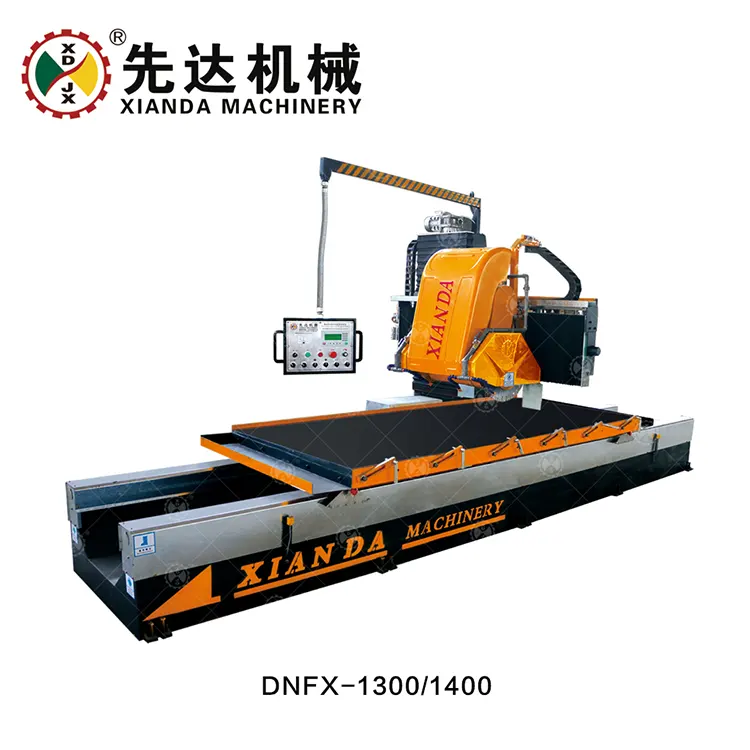
Stone Linear Profiling Machinery is used to process straight-line stone edges and create decorative or functional profiles. Depending on the configuration, it can support shaping, trimming, cutting preparation, groove processing, edge forming, and certain customized processing tasks. The main purpose is to move the processing tool along a controlled path so the stone edge receives a stable and accurate profile.
In practical production, this type of machine is often used when a workshop needs to process repeated edge shapes on slabs or stone components. Instead of relying only on manual grinding, operators can use mechanical movement and controlled processing parameters to achieve more uniform results. This is valuable for stone factories that handle countertops, construction stone, interior decoration stone, and export orders.
Fujian Xianda Machinery Co.,Ltd. provides stone processing machinery for workshops that need dependable equipment for shaping and cutting applications. When buyers consider Stone Linear Profiling Machinery, they are usually not only buying a machine; they are trying to improve production control, reduce unstable workmanship, and build a more reliable processing line.
Typical processing goals include:
- Creating decorative stone edges with repeatable shapes.
- Improving the accuracy of straight-line profile processing.
- Reducing hand-finishing time after shaping.
- Supporting customized countertop and architectural stone work.
- Improving production flow for batch orders.
How Does It Improve Accuracy and Edge Consistency?
Accuracy in stone profiling depends on three major factors: stable movement, correct tool positioning, and controlled processing speed. If any of these factors is unstable, the final edge may show waves, uneven depth, surface marks, or profile deviation. A well-designed Stone Linear Profiling Machinery system helps reduce these problems by keeping movement smoother and more predictable.
When the machine guides the tool along a straight line, the operator does not need to manually maintain the same angle and pressure from beginning to end. This helps reduce human error, especially on long stone pieces. For workshops processing multiple pieces with the same profile, repeatability becomes one of the biggest advantages.
Stable machine structure also matters. Stone is hard, heavy, and sometimes brittle. During processing, vibration can cause chipping or rough edges, particularly near corners or veins in natural stone. A rigid frame, reliable guide system, and suitable tool arrangement can make the cutting or shaping process smoother. The result is a cleaner edge that requires less correction afterward.
| Production Concern | Common Problem | How Profiling Machinery Helps |
|---|---|---|
| Edge accuracy | Manual angle changes during processing | Controlled movement supports more uniform shaping |
| Surface quality | Vibration, tool marks, or uneven pressure | Stable operation helps reduce rough edges and rework |
| Batch consistency | Different workers may produce different results | Repeatable settings support consistent profiles |
| Delivery speed | Manual shaping takes longer on repeated orders | Machine processing improves workflow efficiency |
Which Stone Processing Applications Benefit Most?
Stone Linear Profiling Machinery is useful in many workshops, but it is especially valuable when the same type of edge profile must be repeated across many pieces. This includes countertops, bathroom slabs, hotel engineering projects, commercial decoration, stair components, and customized stone products.
For countertop manufacturers, profile consistency is essential. A kitchen island, side counter, and backsplash edge may all need the same shape. If the edge line changes slightly from piece to piece, the final installation can look mismatched. For commercial decoration projects, the problem becomes even larger because dozens or hundreds of pieces may need to follow the same design standard.
The machine is also useful when working with different stone materials. Granite is hard and can be demanding on tools. Marble may be easier to shape but can chip or crack if the handling is poor. Quartz and engineered stone often require clean, controlled processing to meet modern interior design standards. A stable profiling process helps workshops adapt to these different material behaviors.
- Kitchen countertops: straight edge shaping, decorative edge profiles, and consistent finishing.
- Bathroom vanities: edge forming around stone tops and sink-related processing preparation.
- Stair and step stone: repeatable front-edge shaping for safer and cleaner installation.
- Architectural decoration: stone lines, wall panels, frames, and decorative components.
- Custom stone fabrication: special profiles for project-based orders and designer requirements.
How Does It Compare With Manual Edge Processing?
Manual processing is flexible and still has a place in stone workshops, especially for small adjustments and special finishing details. However, when a company depends too much on manual profiling, production becomes harder to scale. Skilled workers are valuable, but their time should be used where experience matters most, not wasted on repetitive shaping that can be handled more efficiently by equipment.
Stone Linear Profiling Machinery does not remove the need for trained operators. Instead, it allows workers to manage production with better control. Operators can prepare the material, select suitable tools, set the processing requirements, monitor the machine, inspect the result, and perform finishing where needed. This changes the role of labor from heavy manual shaping to process control and quality management.
| Factor | Manual Processing | Stone Linear Profiling Machinery |
|---|---|---|
| Consistency | Depends heavily on worker skill | More suitable for repeatable profiles |
| Efficiency | Slower for batch orders | Better for continuous production |
| Labor demand | Requires intensive hands-on work | Operators focus more on setup and monitoring |
| Quality control | Harder to standardize | Easier to inspect and repeat |
What Should Buyers Check Before Choosing a Machine?
Purchasing Stone Linear Profiling Machinery should not be based only on price. A cheaper machine may look attractive at first, but if it causes unstable processing, frequent downtime, difficult maintenance, or poor profile accuracy, the real cost becomes much higher. Buyers should evaluate the machine according to their stone materials, product types, daily output, operator skill level, workshop space, and long-term production plan.
It is also important to communicate clearly with the manufacturer. A reliable supplier should understand the buyer’s processing needs, not simply recommend a machine by name. For example, a countertop factory, a tombstone processor, and an architectural stone supplier may all need edge profiling, but their production conditions can be very different.
Buyer checklist before ordering:
- What stone materials will be processed most often?
- What edge profiles are required for current and future orders?
- What is the expected daily or monthly production volume?
- How much workshop space is available for installation?
- Is the machine structure stable enough for long-term operation?
- Are spare parts, technical support, and operation guidance available?
- Can the machine reduce rework and improve delivery reliability?
Fujian Xianda Machinery Co.,Ltd. can be considered by buyers looking for stone machinery solutions from a manufacturer familiar with stone cutting, shaping, and processing equipment. The best purchasing decision comes from matching the machine configuration with the buyer’s actual production needs.
How Can the Right Equipment Improve Business Value?
The value of Stone Linear Profiling Machinery is not limited to faster edge processing. Its deeper value is found in production stability. When a workshop can produce cleaner and more consistent stone profiles, it becomes easier to quote projects, schedule delivery, control labor, and build customer trust.
In competitive stone markets, buyers often compare several suppliers before placing an order. Price matters, but so does confidence. A contractor wants to know whether the stone supplier can deliver on time. A distributor wants products that look consistent. A homeowner wants the installed countertop to look refined. A hotel or commercial project manager wants large quantities to follow the same standard. Better profiling equipment supports all of these expectations.
The right machine can also help a workshop accept more profitable work. Instead of refusing complex edges or outsourcing special profiles, the business can process more orders in-house. This may reduce outsourcing costs, shorten lead time, and improve control over final quality.
- More stable product quality helps improve customer satisfaction.
- Reduced rework helps protect expensive stone materials.
- Faster processing can support shorter project deadlines.
- Better consistency makes batch orders easier to manage.
- In-house profiling capability may increase order flexibility.
FAQ
1. Is Stone Linear Profiling Machinery suitable for granite?
Yes, it can be suitable for granite processing when matched with the correct tools, machine configuration, and processing parameters. Because granite is hard, buyers should confirm tool compatibility and machine stability before production.
2. Can it process marble and quartz?
Many stone profiling machines can be used for marble, quartz, engineered stone, and similar materials. The actual result depends on the machine design, tool selection, stone thickness, and required edge shape.
3. Does the machine replace skilled workers?
No. It reduces dependence on heavy manual shaping, but skilled operators are still needed for setup, inspection, adjustment, tool management, and final quality control.
4. Why is machine stability important in stone profiling?
Stability affects edge smoothness, profile accuracy, tool life, and the amount of finishing work required after processing. A less stable machine may create vibration marks, chips, or uneven profiles.
5. What information should I provide before requesting a quotation?
Buyers should provide stone type, slab size, thickness range, desired edge profiles, expected production volume, voltage requirements, workshop layout, and any special processing needs.
6. Is this equipment useful for small workshops?
It can be useful if the workshop regularly handles edge shaping orders and wants to improve consistency. For very low-volume work, buyers should compare investment cost with expected production demand.
7. How does it help reduce material waste?
Controlled movement and repeatable processing can reduce mistakes caused by manual deviation. Fewer errors mean fewer damaged slabs and less need for corrective grinding.
Conclusion
Stone Linear Profiling Machinery helps stone processing businesses solve practical problems that directly affect quality, delivery, and profit. By improving edge consistency, reducing manual uncertainty, and supporting repeatable profile processing, it gives workshops a stronger foundation for both standard and customized stone orders.
For companies processing countertops, architectural decoration stone, bathroom vanities, stair stone, or customized project components, choosing the right profiling equipment can make daily production smoother and more predictable. Instead of treating edge shaping as a slow manual task, stone businesses can turn it into a more controlled and professional process.
Fujian Xianda Machinery Co.,Ltd. offers stone machinery solutions for buyers who want to strengthen their processing capability and improve production confidence. If you are planning to upgrade your stone edge processing line, compare machine structure, processing stability, application range, and supplier support carefully before making a decision.
Looking for reliable Stone Linear Profiling Machinery for your stone workshop or project production line? Contact us to discuss your materials, processing requirements, and equipment needs, and our team will help you find a practical solution for cleaner edges, smoother production, and better long-term value.
Send Inquiry

X
We use cookies to offer you a better browsing experience, analyze site traffic and personalize content. By using this site, you agree to our use of cookies.
Privacy Policy