




Why Does Diamond Wire Saw Machinery Matter So Much in Modern Stone Processing?
Stone processors today are under pressure from every direction: tighter project schedules, rising labor costs, demanding shape requirements, and the constant need to reduce waste while maintaining clean edges and reliable output. In this environment, choosing the right cutting system is no longer just a production decision. It directly affects material yield, workshop efficiency, product consistency, and long-term profitability. Diamond wire saw machinery has become a practical answer for manufacturers that need flexible cutting across granite, marble, concrete, and specialty materials without sacrificing control.
Article Summary
This article explains how diamond wire saw machinery helps stone manufacturers solve common production problems such as inaccurate cutting, limited shape flexibility, unstable output, excessive waste, and slow changeovers between jobs. It also shows what buyers should look for in a machine, how the technology supports both standard and special-shaped processing, and why a dependable supplier such as Fujian Xianda Machinery Co.,Ltd. can make a real difference when workshops need steady performance instead of empty promises.
Table of Contents
Outline
- The everyday production pain points faced by stone factories
- The working advantages of diamond wire saw machinery in real processing scenarios
- Typical applications from slab cutting to complex profile work
- Key buying standards that separate reliable machines from risky purchases
- The importance of technical support, machine stability, and supplier experience
- Practical answers to common buyer questions
What Problems Are Stone Processors Trying to Solve?
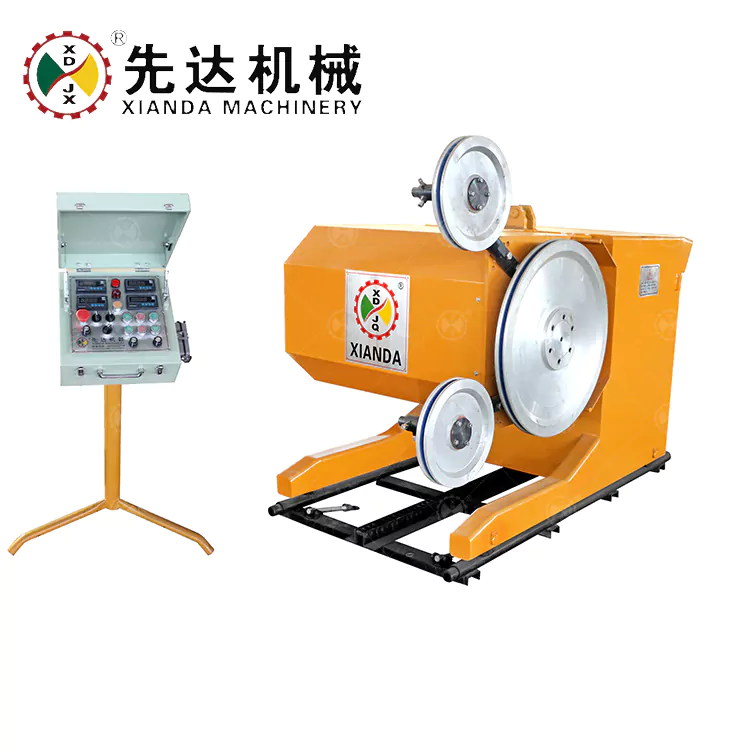
Many stone workshops do not struggle because they lack demand. They struggle because their production methods cannot keep up with the jobs coming in. One week they need to cut straight slabs efficiently. The next week they receive an order for curved panels, cylindrical elements, lettering, tombstone shapes, or custom architectural pieces that require much more precision. Traditional cutting approaches often work well for only one type of task, which forces factories to compromise either speed or flexibility.
This is where the biggest pain points usually appear. Material loss eats into margins. Rework slows delivery. Edge quality becomes inconsistent across different materials. Operators spend too much time adjusting the machine instead of producing finished parts. When a factory wants to move from standard cuts to special-shaped products, the limitations become even more obvious. The workshop may have customers, raw materials, and labor, yet still lose opportunities simply because its cutting equipment cannot respond fast enough.
Buyers are not only looking for a machine that can cut stone. They are looking for a machine that can support business growth. That means stable motion, controllable speed, repeatable accuracy, reasonable operating cost, and the ability to handle more than one product category. A machine that performs well in theory but causes frequent stoppages in practice quickly becomes an expensive problem.
Common Factory Pain Points
- Difficulty cutting both straight and special-shaped stone products on the same production line
- Excessive material waste caused by poor control or unstable cutting behavior
- Inconsistent finished quality across granite, marble, concrete, and other materials
- Slow setup changes between jobs, which lowers daily output
- High dependence on operator experience instead of machine intelligence
- Frequent concerns about vibration, poor precision retention, and unstable performance
How Does Diamond Wire Saw Machinery Improve Cutting Performance?
Diamond wire saw machinery offers an answer because it combines flexibility with controlled cutting action. Instead of forcing the material into a single rigid process path, the wire-based system allows efficient cutting across different shapes and material types. That makes it especially valuable for workshops that need to balance volume production with custom work.
One of its most practical advantages is adaptability. A manufacturer may process granite in one job, marble in another, and then move to shaped architectural components, memorial products, or decorative pieces. The right machine supports that range instead of turning each new order into a technical headache. Better speed control, more stable tension behavior, and improved motion coordination all help the operator keep cuts cleaner and more consistent.
Another major benefit is precision in complex processing. Factories increasingly need circles, arcs, columns, letters, numbers, and irregular shapes rather than simple blocks alone. This is where advanced diamond wire saw machinery becomes more than a cutting device. It becomes a production tool that helps convert design intent into saleable finished products. When the movement system is reliable and the machine remains stable during long production cycles, factories gain both quality and confidence.
A well-designed machine also improves workflow, not just cut quality. When tension, feed, and path control are managed properly, the operator spends less time correcting mistakes. The result is a smoother production rhythm, more predictable lead times, and fewer disputes between the sales team and the workshop about what can realistically be delivered.
| Production Challenge | How Diamond Wire Saw Machinery Helps | Business Impact |
|---|---|---|
| Complex shape requirements | Supports curved, cylindrical, lettered, and irregular cutting tasks | Expands product range and helps win higher-value orders |
| Poor precision consistency | Improves cut control with more stable motion and process management | Reduces rework and improves finished quality |
| High waste during cutting | Enables more controlled material removal and cleaner processing | Protects margins and improves material utilization |
| Slow switching between jobs | Handles multiple materials and applications with stronger process flexibility | Improves workshop responsiveness and delivery confidence |
Where Does This Machinery Create the Most Value?
The value of diamond wire saw machinery becomes most obvious in workshops that cannot afford to stay limited. If a factory only produces one simple shape all year, basic equipment may still be enough. But the market rarely stays that simple. Builders, stone fabricators, memorial manufacturers, and decorative stone suppliers increasingly request customized work. They want detail, finish quality, and reliable delivery. That requires machinery with a broader processing capability.
This technology is particularly useful in the following situations: block cutting where control and consistency matter, special-shaped processing where normal straight-cut systems fall short, and mixed-material workshops where equipment must adapt without constant compromise. It is also valuable for factories moving up the value chain. Instead of competing only on basic rough cutting, they can begin offering more refined products with better margins.
For companies that want to reduce dependence on manual correction, modern diamond wire saw machinery also supports a more disciplined production environment. Better automation and better control make it easier to standardize output, train operators, and maintain confidence across repeat jobs. That is especially important when orders come from overseas buyers or demanding construction projects where variation can create costly downstream problems.
Typical Application Scenarios
- Granite and marble cutting for standard production lines
- Curved slabs, arc plates, cylinders, and custom architectural stone work
- Lettering, numbering, memorial products, and decorative stone components
- Concrete or specialty material processing where cutting flexibility is important
- Factories upgrading from basic cutting to more profitable custom fabrication
What Should Buyers Check Before Choosing a Machine?
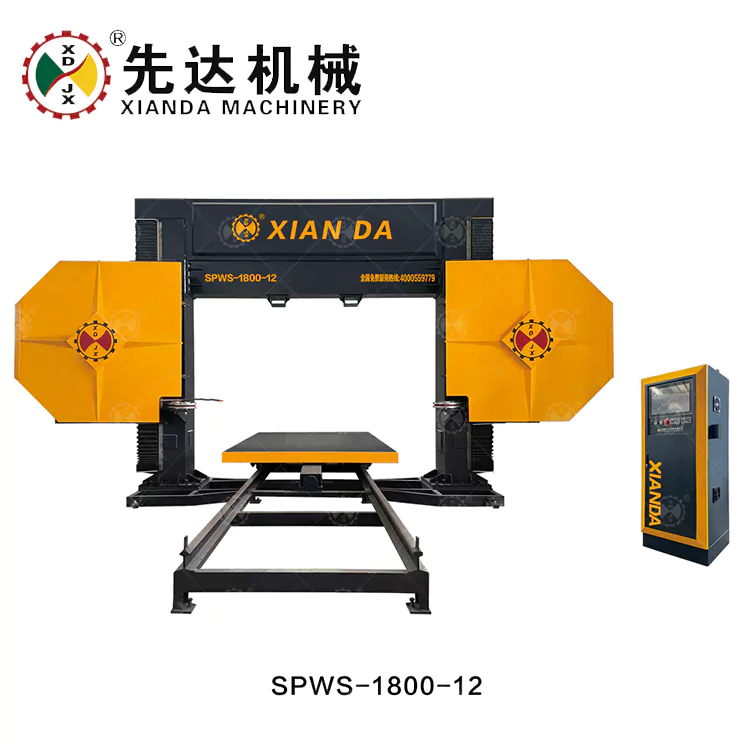
A surprisingly common mistake is to compare machines by headline claims alone. On paper, many machines sound similar. In real production, the differences show up in stability, accuracy retention, control response, ease of operation, and after-sales support. Buyers should think beyond the initial quotation and ask what the machine will feel like after months of daily use.
First, check whether the machine matches the actual material and product range. A factory that processes both granite and marble, or that wants to move into special-shaped cutting, should not buy equipment that only performs well in narrow conditions. Second, pay attention to structural rigidity and motion stability. If vibration or tracking inconsistency appears during cutting, the resulting defects will cost far more than any small saving on purchase price.
Third, review the control system carefully. A good machine should help the operator work better, not force the operator to compensate for design weakness. Usability matters. So does maintenance access. So does the supplier’s willingness to explain settings, production logic, and troubleshooting clearly. Reliable support is not a bonus. It is part of the machine’s value.
Finally, ask whether the supplier understands your factory goals. Some buyers need immediate volume output. Others want greater shape flexibility, lower waste, or future expansion into advanced processing. The right machine choice depends on the business direction, not only on technical specifications.
| Buying Factor | What to Ask | Why It Matters |
|---|---|---|
| Material compatibility | Can the machine handle the stone types and product variety we process? | Avoids underperformance in real workshop conditions |
| Precision stability | How does the machine maintain cutting quality over time? | Supports consistent finished products and lower rework |
| Operational control | Is the control system intuitive, responsive, and practical for operators? | Improves daily efficiency and reduces training burden |
| Supplier support | Will the supplier provide useful technical guidance after delivery? | Reduces downtime risk and protects long-term productivity |
How Can the Right Supplier Reduce Long-Term Risk?
Buying machinery is not only about choosing a model. It is also about choosing the technical judgment behind that model. A supplier with real industry understanding can help buyers avoid mismatched equipment, weak production planning, and costly trial-and-error after installation. This is especially important when the machinery will be used for both standard cutting and higher-value custom work.
Fujian Xianda Machinery Co.,Ltd. is known in the stone machinery field for diamond wire saw solutions oriented toward practical processing needs. For buyers, that matters because a capable supplier should not merely sell a machine. It should understand the relationship between material type, shape complexity, control stability, and workshop efficiency. That kind of experience helps customers make decisions with more confidence and fewer hidden risks.
A dependable supplier relationship becomes even more valuable after the machine arrives. Setup guidance, operation support, spare-parts coordination, and problem-solving communication all affect the real return on investment. Factories do not make money from machine brochures. They make money from stable production. That is why serious buyers pay attention to supplier reputation, technical continuity, and responsiveness before signing any order.
In short, the right supplier supports both present needs and future expansion. Whether a business wants better quarry cutting performance, more refined CNC processing capability, or a smoother path into custom stone manufacturing, supplier strength shapes how quickly that progress becomes reality.
FAQ
Can diamond wire saw machinery be used for both standard and special-shaped stone products?
Yes. One of the main advantages of this machinery is its ability to support both routine cutting tasks and more complex shapes such as arcs, cylinders, letters, and decorative components, depending on the model and control system.
Is diamond wire saw machinery suitable only for granite and marble?
No. It is widely used for granite and marble, but many systems are also applied in processing concrete and other specialized materials when cutting flexibility and controlled performance are needed.
What is the biggest benefit for factories upgrading from older cutting equipment?
The biggest benefit is usually a combination of better flexibility, cleaner cutting, and stronger control over complex jobs. This helps factories reduce waste, improve finished quality, and accept more profitable orders.
How important is after-sales support when buying this type of machine?
It is extremely important. Even a capable machine can lose value if the supplier cannot provide practical support for installation, operation, maintenance, and troubleshooting.
How should a buyer start comparing suppliers?
Start by comparing application fit, machine stability, production flexibility, control usability, and service responsiveness. A trustworthy supplier should be able to discuss your actual processing goals instead of only quoting a price.
Conclusion
Diamond wire saw machinery matters because modern stone processing is no longer defined by simple volume alone. Buyers need flexibility, precision, stable performance, and room to grow into more demanding applications. The right equipment can help reduce waste, improve consistency, expand product capability, and create a smoother production workflow from raw material to finished result.
For stone factories that want practical cutting solutions rather than generic claims, working with an experienced manufacturer makes the decision much safer. Fujian Xianda Machinery Co.,Ltd. offers diamond wire saw machinery for businesses that need reliable performance across a wide range of stone processing requirements. If you are planning your next equipment upgrade and want to improve both efficiency and finished quality, contact us today to discuss the right solution for your production goals.
Send Inquiry

X
We use cookies to offer you a better browsing experience, analyze site traffic and personalize content. By using this site, you agree to our use of cookies.
Privacy Policy